Judge when to hold, watch or drop a player by role, replacement quality and squad needs.
Drop a player when the best realistic replacement offers more useful future value in your league. A disappointing last score or an expensive draft pick is not enough. Compare what each player can contribute from here, including likely minutes, scoring fit and the positions your squad needs covered.
TFF uses exclusive player ownership, so releasing someone gives other managers a chance to take them. That makes patience valuable, but it also makes the cost of holding real: the squad place could help you elsewhere. The decision is whether keeping this player still earns that place.
Start with the role, not the last score
Check what has changed on the pitch. Is the player still starting, playing substantial minutes and doing the things that made you draft them? A forward can miss chances without losing their place. A midfielder can go quiet while keeping the same attacking responsibilities. Poor returns deserve attention, but they are different from reduced opportunity.
A stronger reason to move on is a sustained loss of starts or an important role, backed by team selections and reliable reporting. Repeated early substitutions, a tactical change or a competitor taking the position can weaken the case for holding. One bench appearance does not settle it. Ask whether there is a credible route back, what evidence supports it and what would change your judgement.
Decide how long you can afford to wait
Separate a temporary setback from a problem with no clear end. Short-term rotation or a difficult fixture run may justify patience if the underlying role remains sound. Injury decisions need the same discipline: use the latest reliable information, distinguish a reported return window from a confirmed return, and remember that being available to play does not guarantee starting minutes. If the timeline is uncertain, acknowledge that uncertainty instead of choosing an optimistic date.
Then look at your squad. Can you field a legal lineup while waiting, or are several uncertain players leaving you short together? A promising long-term hold can still be the wrong fit for a squad needing immediate cover. Consider the next few fixtures for both players, including likely playing opportunities and whether either helps your uncovered positions. An attractive opponent matters less if the player is unlikely to feature.
Compare with someone you can realistically acquire
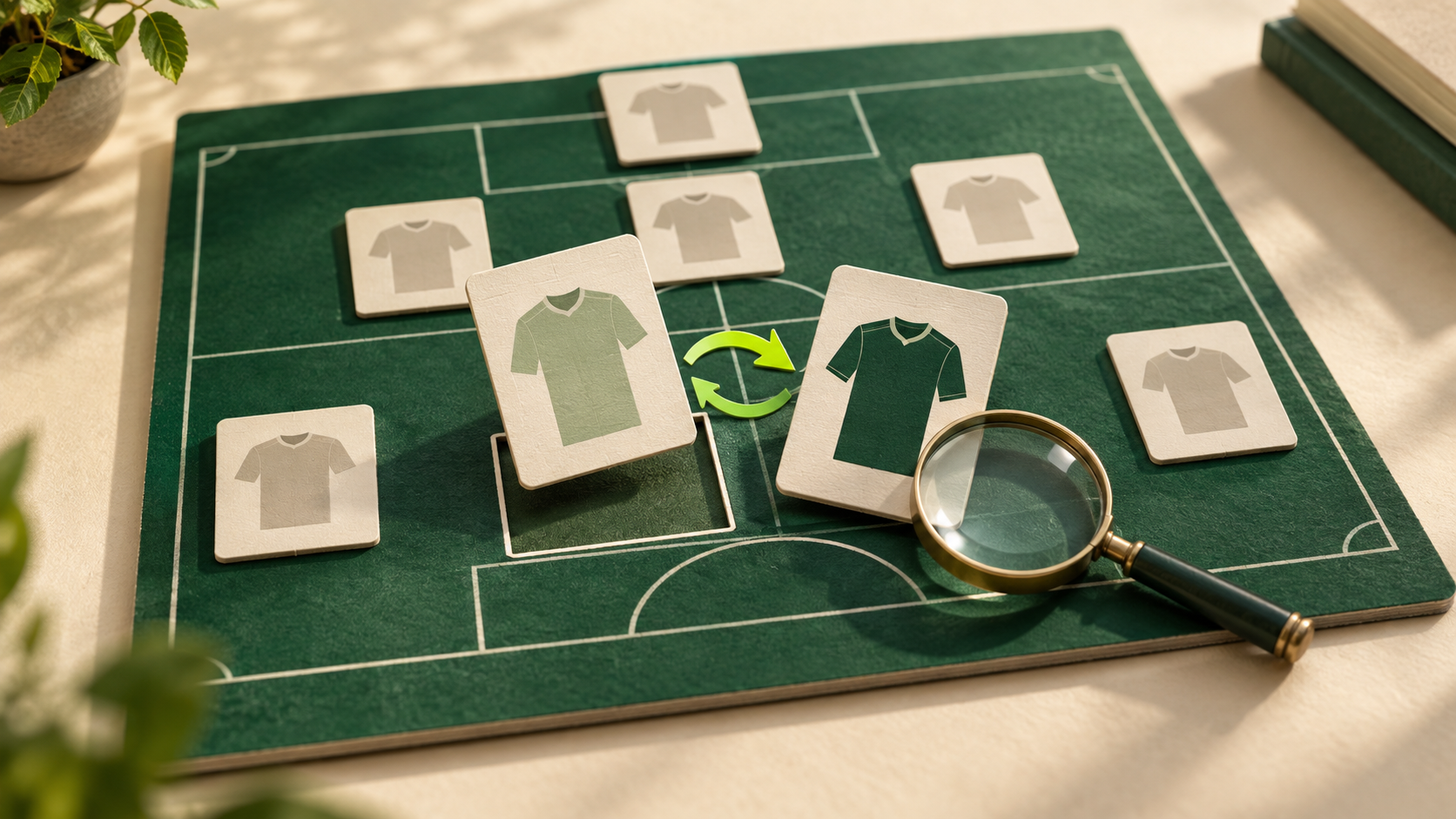
The alternative sets the standard. In a smaller league, useful replacements may be easier to find, making a marginal hold harder to justify. In a deep league, a dependable starter can be difficult to replace. Check your actual league pool rather than assuming league size tells the whole story. Compare the current player and replacement over the same period, with the same scoring system and your squad's needs in mind.
Read your own scoring and league rules before judging that fit. A player's football contribution matters only to the extent that it helps your fantasy team under those rules. The TFF explainer provides the broader context. Avoid replacing a disappointing score with someone else's isolated big return: look for a role and minutes that make the alternative useful beyond one match. If no realistic option improves your squad, holding can be the right decision.
An illustrative hold-versus-drop comparison
This comparison is hypothetical. The unnamed players are illustrative, not recommendations or reports of current availability. Assume the same scoring system and a replacement who fits the position you need. "Secure" below describes the replacement's starting role, not a guaranteed successful acquisition.
Short quiet spell
- Current player: Still starts and retains the same responsibilities, but recent returns are poor.
- Recovery case: Opportunity remains; the points have disappointed.
- Replacement: A regular starter offering little clear improvement.
- Lean: Hold unless stronger evidence changes the comparison.
Lasting loss of role
- Current player: Has lost the starting position following a sustained tactical change.
- Recovery case: No clear route back to regular minutes.
- Replacement: A regular starter who would provide useful lineup cover.
- Lean: Drop if the replacement can be secured under your league's rules.
The difference is future opportunity, not how frustrating either player feels to own. Neither outcome is certain: the quiet starter could continue struggling, and the displaced player could regain their place. A sensible decision uses the strongest evidence available at the time; it cannot guarantee the next result.
Check the route out before releasing anyone
Your original draft position is a sunk cost: it cannot improve the player's next contribution. Ask, "Would I choose this player over the replacement today?" If the answer is no, reputation should not decide it. Where your league permits trades, consider whether another manager values the player's upside enough to offer something useful. That is an alternative worth checking, not a reason to assume a deal exists.
Before dropping, check the claim and release rules . You might not win the replacement, and you should not assume you can reclaim the player you release. Have a fallback and confirm that the resulting squad can field a legal lineup. The lineup and bench guide can help you check cover before making the decision.
Use the same hold, watch or drop checklist
- Role: Are starts, minutes or responsibilities changing, or only the points?
- Setback: Is there a credible recovery path, and how uncertain is the timeline?
- Fit: Does the player suit your scoring and cover a position you need?
- Replacement: Is there a realistic improvement over the same future period?
- Execution: Can you pursue it without assuming success or leaving a lineup gap?
Hold when the role remains useful and the alternative adds little. Watch when the evidence is mixed: choose a review point, such as the next team selection or reliable injury update, and say what would change your mind. Drop when the replacement offers a clearer benefit and you understand the acquisition risk. Repeating this check is more useful than setting an arbitrary limit on disappointing matches.
Compare players in Draft Lab to research the player pool and save a watchlist on this device. It is a research screen, not a league-specific availability list. Check your own league before treating any researched player as an option.