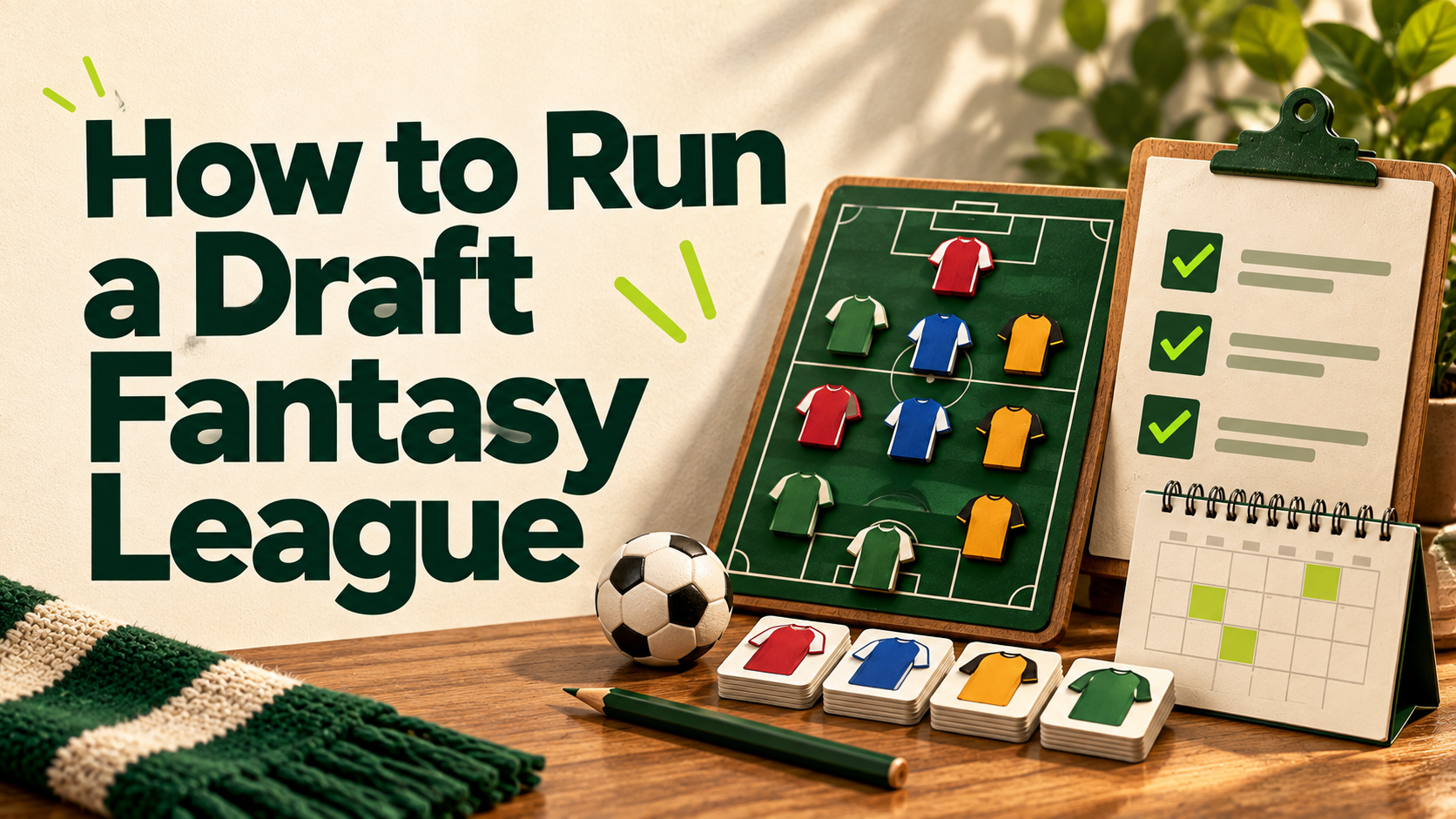
Draft fantasy football starts with one simple rule: each player can belong to only one manager in your league. If somebody else drafts the forward you wanted, you cannot select him too. You have to find another option.
That changes the entire game. Your league holds one draft, every squad comes out different, and managers spend the season competing over a genuinely limited player pool. Draft night matters, but so do the decisions that follow it.
Exclusive players change the game
In many salary-cap fantasy games, several managers can own the same star. Draft fantasy removes that overlap. Once a player is selected, he disappears from everyone else’s draft board. Your first-choice targets will not all reach you, so every pick is shaped by what your rivals have already done.
This creates scarcity. There may be plenty of useful midfielders available, but only a handful of reliable forwards or defenders who dominate the actions rewarded by your scoring system. A player’s value is therefore about more than his expected points. It also depends on what will still be available at that position when your next turn arrives.
How does a snake draft work?
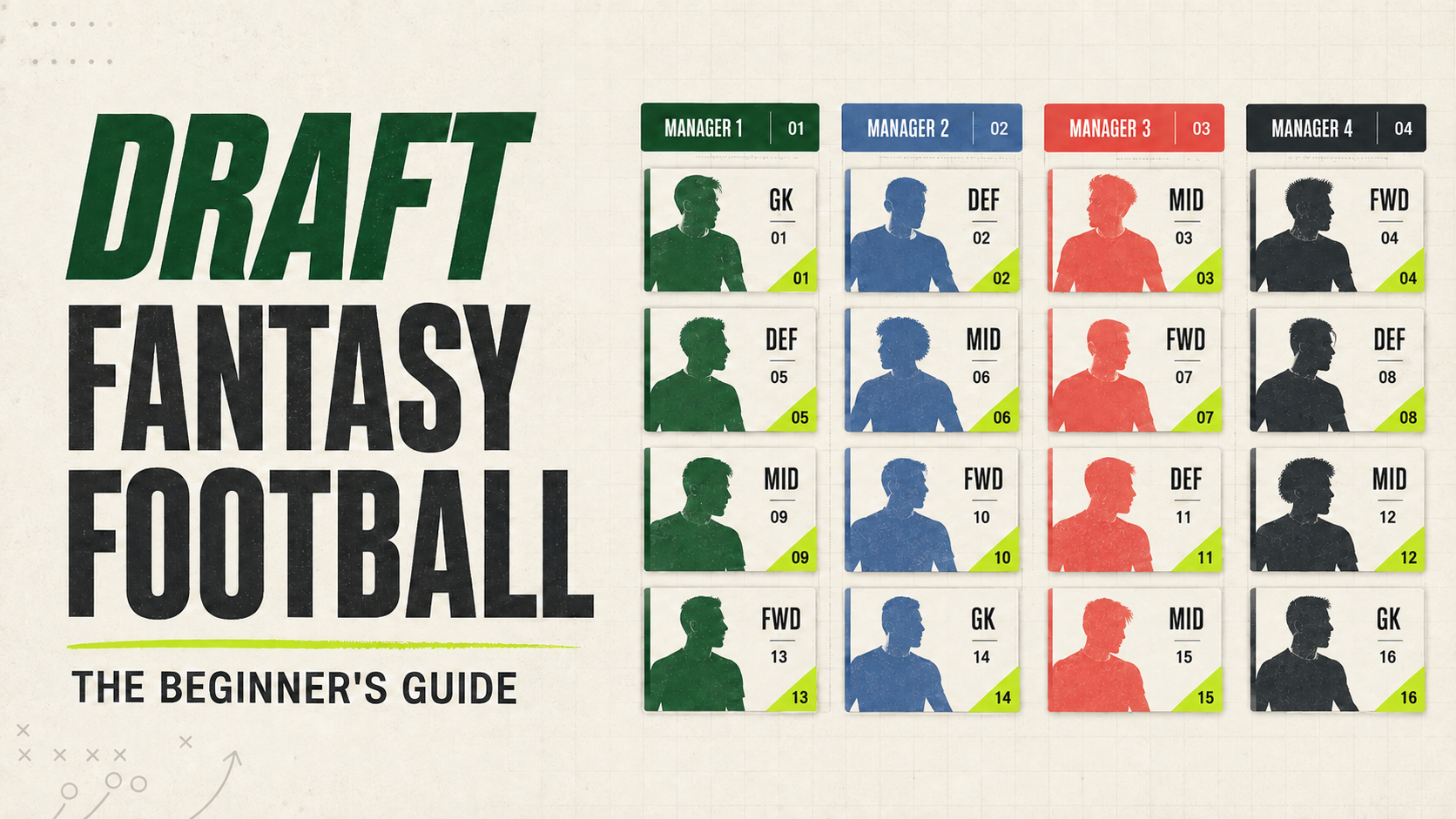
The most common format is a snake draft. Managers take turns choosing players, but the order reverses after each round. In a four-team example, Round 1 runs A, B, C, D. Round 2 comes back D, C, B, A. The manager picking last in one round gets the first choice in the next.
Top Four Fantasy leagues use this format for a draft that fills every squad. The default is 16 rounds and a 16-player squad. A commissioner can choose a shorter roster before the draft is scheduled. The order can be randomised or set by the commissioner. Your group can draft together online, or use an offline draft to import rosters that were already selected elsewhere and continue the season on TFF.
Draft night is only the beginning
Once the draft ends, you set a starting lineup for each Gameweek. On TFF, that means choosing the lineup your league uses. The default is 1 goalkeeper, 3 defenders, 3 midfielders, 2 forwards and 2 FLEX players from your squad. FLEX spots can be filled by any outfield position, giving you room to adapt to form, fixtures and injuries. The remaining players sit on an ordered bench.
Your league also chooses how performances earn points. Classic focuses mainly on goals, assists, clean sheets and appearances. Balanced adds more attacking and defensive actions, while Analytics places greater weight on creation and defensive work. The right player for one scoring system may be less valuable in another, so checking the rules before the draft is essential.
Waivers, free agents and trades
A poor draft pick does not ruin your season. Undrafted and dropped players return to the shared player pool. Waivers give every manager a fair chance to claim the most popular options before they become free agents. On TFF, weekly priority is based on the reverse league standings, so teams lower down the table get the first opportunity to improve. Players who clear waivers can then be added directly as free agents until their fixtures lock them.
Trades offer another route to improving your squad. You might have several strong midfielders but need a forward, while another manager has the opposite problem. TFF leagues can use mutual approval or require commissioner approval after both managers accept. Trades involving locked players wait for the next available processing window, and bot teams do not participate in trades.
Why head-to-head matchups feel different
Instead of competing only on total points across the season, draft leagues can place you against one rival each Gameweek. The manager with the higher score wins the matchup, while equal scores produce a tie. Those weekly results build the league table, which means a narrow win over a friend can matter just as much as posting one of the week’s biggest totals.
In TFF leagues with cup and playoffs enabled, managers can reach the Top Four playoffs through the table or by winning the cup. The playoff winner becomes Top Four Champion. Four-manager leagues do not use the cup or playoffs, so first place in the final table wins the league. Larger leagues can also turn those competitions off if the group prefers a straight season-long table.
Is draft fantasy football right for your group?
Draft fantasy works best for groups that want more rivalry, more negotiation and more reasons to care about players beyond the obvious stars. TFF supports leagues of 4, 6, 8, 10 or 12 managers, with eight as the default. Bot managers can fill empty seats, take part in the draft and manage their weekly lineups. A friend can take over a bot seat later, so the league does not have to wait for everyone’s diary to align.
Anyone can try Draft Lab as a guest before committing to a live season. Live Leagues are currently available through early access: you can register, join a private league with an invite code or request creator access to start your own. The draft gives you your starting point, not your final team. If that sounds like your group, see how Top Four Fantasy works and get ready for the first pick.